Showing posts with label Nucs. Show all posts

Friday, May 3, 2013

Snow in May!

Get a load of this!


I don't recommend having snow in May at all, especially after you've already grafted and have mating nucs out and all the rest.  This is no good.  Don't do it, you wouldn't like it.

Anyway, that's the news.  I have reservations to fill and hives to be requeened after that, so there is a bunch of necessity to get these grafts and mating nucs moving and the weather has been extremely uncooperative.  I can only hope for a long and moist season or there won't be any honey this year.  I will deliver on nucs if at all possible.

Wednesday, March 6, 2013

Feeding Granulated Sugar

While I generally try to feed as little as possible.  When I do need to feed, I am lately trying to avoid syrup because of all the problems it causes.  So I feed granulated sugar.


This hive above as you can see never really made it up into the second box.  Being that this hive uses medium frames, a single box is not much.  Normally I wouldn't be so concerned about a small hive like this, but I want to raise medium nucs this year.  And while I don't need a medium hive to make queens for medium nucs, I do need brood on medium frames which means I need some medium hives to survive.  So I took out half a dozen frames or so and laid a paper towel across the space and put a couple pounds of sugar in there.  So you can see the result.


The time to feed is naturally when all other options are off the table.  It's early or mid winter and you can't feed syrup. Feeding is a last ditch effort to save a hive, not to prop it up, but to maintain its utility.  These hives that I fed will not be used for honey production or breeding.  For the most part, they will be split up to donate their brood to new hives which will be headed by queens bred from the best.  If they are lucky, the queen and some brood will be placed in a nuc to draw comb for the spring and then probably killed either by summer or by being combined with some stronger hive.  Much depends on each hive's spring performance.  A solid spring can make up a little ground from a weak fall and winter, especially for a yearling hive.

Friday, March 1, 2013

Nucs or Packages

When starting out in beekeeping, there are a couple of options, the most reliable of which are buying bees.  Sometimes if available, you can buy whole established hives, but they are expensive and rare.

The main options are nucs and packages.

A package is a bunch of bees in a screened box, usually 3 lbs.  A queen is included in her own cage and a can of syrup is usually included too.  These are made by dumping a bunch of random bees in a box and adding a queen.  The queen is not related directly to the bees, and in fact have come from different hives.  You know virtually nothing about either.  Your confidence in the sale is directly related to your confidence in the seller. 

A nuc (or nucleus hive) is a small hive, usually five frames.  If you have a quality seller, the queen will have been in the hive for a long enough period of time so that she has laid it full of brood and all the bees in the hive are her daughters and are representative of her genetics.

A package will lose a significant portion of its population before a single new bee hatches.  A nuc will have new bees hatching every day.  It is already a fully functioning hive.  It includes drawn comb.

Understand, I'm not hyping nucs because I sell them.  I do, but that kind of idea is backwards.  I sell nucs because I strongly believe they are the best option for starting new hives.  Well, the best option is splitting your own, but if you need to buy some, nucs are the best option.  And that's why I sell them.  If I thought packages were the best option, I would sell them. 

For a seller, packages are probably the best money making option.  They cost very little in resources, essentially just bees in a screened box.  And they tend to die about half the time in the hands of a new inexperienced beekeeper.  So not only do you sell a cheap product for a significant chunk of money, your customers keep coming back because the product they bought keeps breaking.

Well, there you have my view.  If you have any other questions, I am happy to answer them.

Wednesday, February 27, 2013

A New Year

Sorry, no pic this time.  Weather is dreary and cold.  I don't like winter.  I'm very glad it's short here.

So, what's up this year?

Well, great news thus far.  As of yesterday when I stopped by one of my outyards, I have 100% survival of my 23 hives.  After last year's survival numbers (10/11) I am really stoked that my methods are finally being proved to be successful.  Just in time for my tenth anniversary of the day I drove to Orland California and bought my first 20 packages of bees.

This year, I plan on continuing to do what I began last year. 

I will be making more queens and nucs:  I have talked to several of last year's customers and as far as I know, they've had 100% survival of my stock.  I already have around ten reservations for queens and nucs.  After making 30 hives out of 7 last year, I should be able to make easily as many this year and make a fair amount of honey too.

I will continue my switch to medium hives:  I just finished (minus paint) eight new medium boxes.  It was great to fire up the old table saw again, though somehow I bent the fence.  And it is definitely an old table saw, it's older than me.  But it's a quality machine, all cast-iron and whatnot.  I need to make more of my ten frame nucs, but in medium sizes. I need to start moving mediums to the outyards and deeps back home.  Selling nucs will get rid of my deep frames and I will need to buy more medium ones.

I'm not going to attempt to catch swarms:  Last year I expended a lot of time, effort, and resources to put up swarm traps and got less than 10% return.  Now that I have as many hives as I want, I don't need them anyway.

I will continue to grow the hives that I have:  I have about a dozen deep boxes remaining, totally empty, ready for foundation.  And after my incredible increase from last year, I have a lot of hives which will need supering very soon.  Right now it is cold and the foundation is brittle so I'm holding off on that chore for the time being.

Settling into final numbers:  I originally wanted to run 20 hives, but with two locations with space for 8 each and the home yard with space for nine, 25 sounds about right.  I shall have to be more diligent this year in the fall with combining weak hives.  Not that they have trouble wintering, they seem to do fine, but I want to focus genetics on hives that are a little larger and build up faster in the spring.

And of course, I'll continue to be obnoxious on Beesource.com.  I have to keep needling the naysayers, explaining that after all these years, it still can be done and I am still doing it.

Wednesday, April 25, 2012

New Queens, Hives All Over the Place

 Here's the latest picture of the home yard.

There's been a lot going on and not enough time to write about it and a deficit of pictures to explain.  

But here's one that should explain a little.


These are the queen cells taken from my queenless starter/finisher.  As you can see, 11 of 18 made the cut.  In the queenright starter/finisher, 17 of 18 made it through.  I've decided to use the queenright method from now on.  It's much easier, very simple, and you don't have any of the downsides related specifically to queenless methods.  This small sample size also shows how well it can work for a first timer compared to queenless, however, don't trust just two tests.

After the cells were matured, I got out on a Tuesday morning a few weeks ago and robbed seven hives of all but one frame of brood to have enough brood to make up the mating nucs.  The mating nucs are 3x3 queen castles that I designed and built myself.
In each, I placed an empty drawn comb, a comb of honey, and a frame of brood with adhering bees.

You can see in the picture at the top of the page most of them.  Three are in other places around the property.  After the queens hatched, I removed the queen cells and cell protectors.  The JZBZ cell protectors don't fit over the cell, but they still can protect and be used as a way to attach the cell to the comb.

After checking them a couple times, I can safely say that the vast majority have mated and returned healthy.  I have found one where the queen didn't return and one where the queen has not begun laying.  Out of 28 cells, those are pretty good numbers.  The nucs are all brooding and the first weekend in May, I will begin culling, combining, and figuring out where they will all be going.

My goal is to go into winter with at least 25 hives and the extras will be sold as nucs.  So, not too long and there will be nucs for sale.

Wednesday, October 26, 2011

How to Use Nucs.

Here's my most recent yard pic:

I recently watched this excellent video on keeping nucs as part of one's operation.  It's long so that means if I'm recommending it, it's really good.  This is just part one, there's also a part two.


Mike Palmer 4/2011 The Sustainable Apiary Part 1 of 2 from PWRBA (Prince William Regional B on Vimeo.

The idea is that keeping nucs, even as many as you have regular hives gives you all sorts of flexibility and sustainability in your bee yard especially if you are raising your own queens.  At this point in history, any serious beekeeper should.  As Michael explains, queens and packages are becoming more and more unreliable.

Among other reasons, nucs offer the ability for quick requeening, quick hive replacement, quick increase, the ability to use a nuc as a 'bee bomb' to boost a hive's production, the ability to raise and test queens before devoting much equipment to them, the ability to draw out new combs rapidly without suffering honey production, and as a consistent product to sell.

I currently have the equivalent of 10 nucs that I will be attempting to put into circulation this next spring.  After this disastrous summer we've just had, the idea of selling nucs primarily appeals to me as such a thing can be done even with zero honey production in a calendar year.  The really big thing that I learned was not to make nucs from your big productive hives, but to make nucs from mediocre healthy hives, but make queens from your big productive hives.  Thus far, I have been splitting queens the old Emergency Queen way but this next year, I'm going to be grafting.  If that fails, I'll try the Nicot system or Jenter. 

I could go through and explain the whole system to you but it would take hours to type and read and you can watch the whole video yourself.  So please go watch the video.  You'll find it well worth your time.

Wednesday, July 13, 2011

My First Outyard

Yesterday, I moved my first hives away from the home yard.  Here's what the yard looked like mid-move.

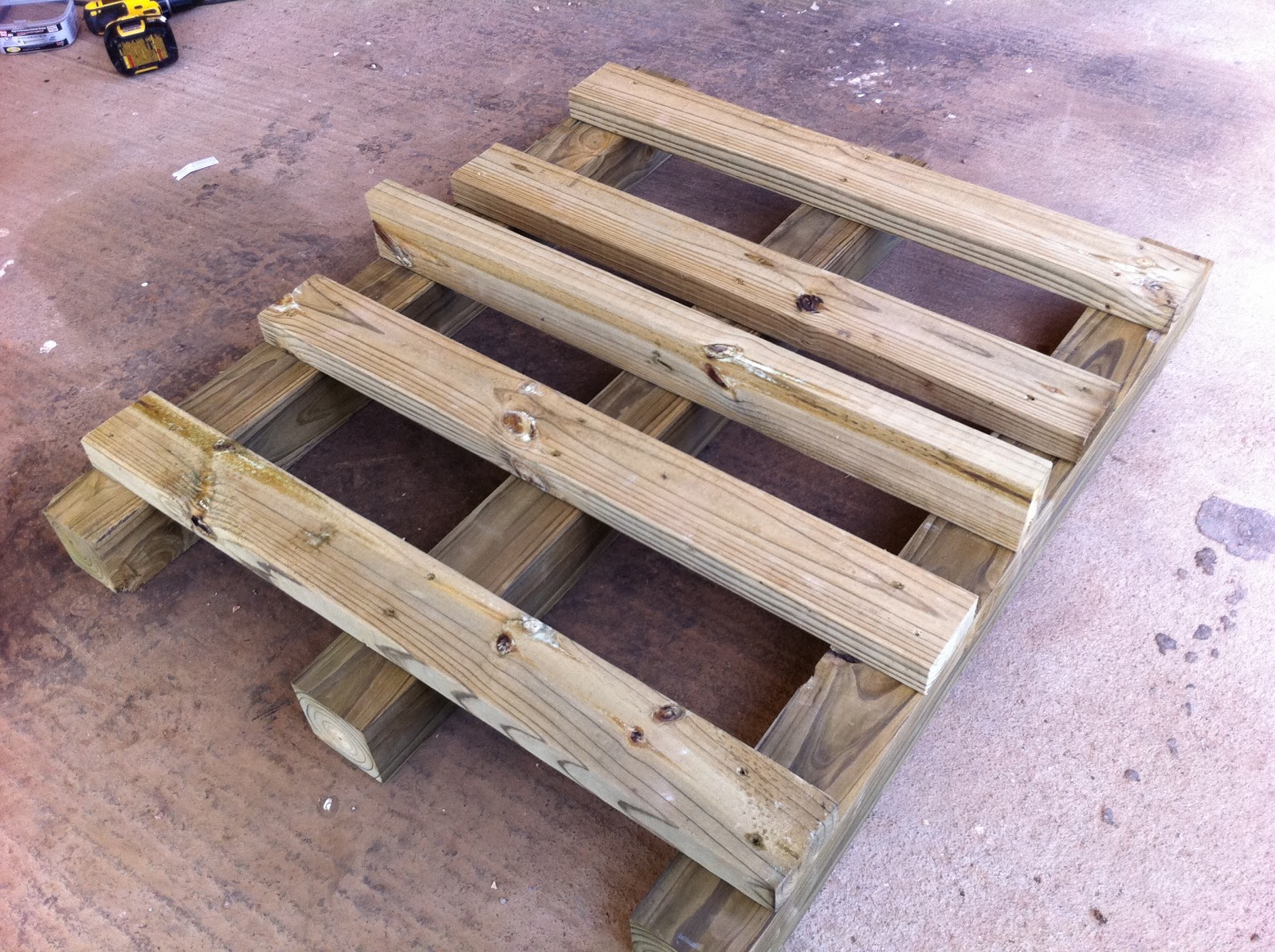
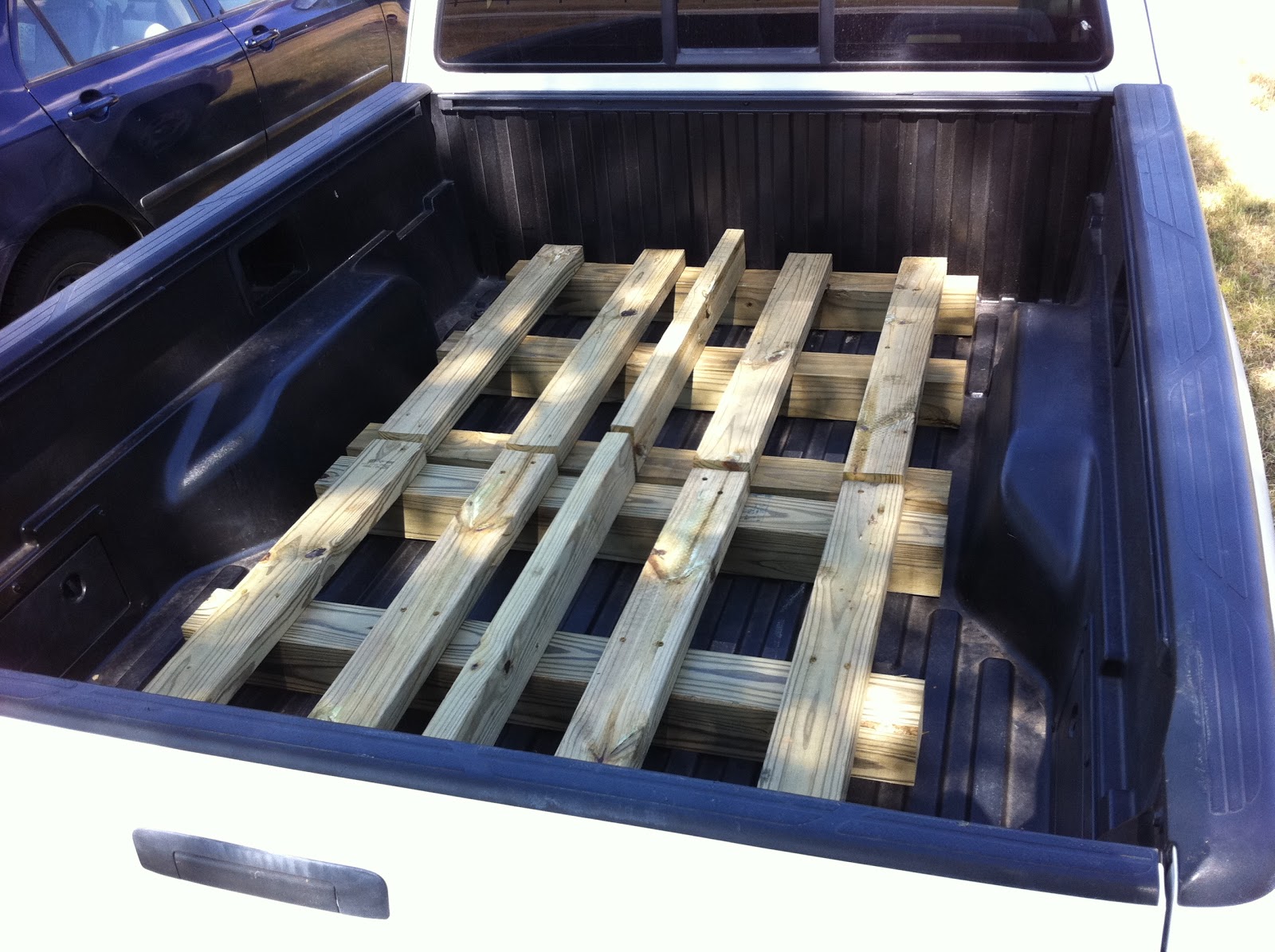
I started by designing and building a pallet to hold my hives.  I used the design of my bottom boards and my ten frame deep nucs as a center piece.

The result is a very sturdy and strong pallet of which two fit in the back of my pickup.

And here's the result in the field. 

The hives went to my church's farm, called "The Farm" which provides food to subscription holders and those subscriptions also pay for food for the economically disadvantaged.  So, I'm essentially treating it like a free pollination job.

I've discovered that the flat dark green paint I used to paint those boxes makes the hives way too hot, so I've begun switching them out.  While this is probably only a problem this time of year when it has been over 105 just about every day at my home for the past two weeks, I don't want to put the bees at a big disadvantage.

To Do:  Need to repaint the green hives. 

Thinking about making a slow switch to medium boxes.  I have 68 deeps which is the equivalent of approximately 100 mediums.  If I start selling nucs, it will be easy to sell anything away, and replace deeps with mediums in the process.  I don't need to get rid of the boxes, they can be trimmed, but it is a little harder to trim the frames, especially those with good comb still in them.  I think it can be done pretty well in a progressive fashion, as I sell 5-frame nucs.  All I need to do is sell two nucs, trim one box, buy eleven new frames.  Eventually I'll have nothing but mediums left.  But that means I'll have to sell about 130 nucs.  Could take a few years.

Also, learning about how to do combs.  As I now trim all new end bars to 1 1/4", I can fit eleven frames to a box.  So I do that for three deeps or five mediums, then above that place nine frames to a box for honey storage.  I'm also probably going to switch to Michael Bush's frame system where he uses mostly PF-120's and the rest foundationless.  The only difference is, I trim the endbars, which was his idea, but with is volume he hasn't taken the time to do it on all the plastic frames.

Saturday, April 9, 2011

A Lot of New Stuff

Today's picture:


This last week, I have done quite a few things.
First, I ordered some Mann Lake PF-105's.


These are black plastic frames with a cell size of about 4.95mm.


I trimmed the end bars from almost 1 3/8"


To about 1 1/4".


This for what could be called "Narrow Frame Beekeeping."  Michael Bush's website explains it here.  The basic idea is that with smaller cells, naturally, the space between the combs will also be smaller.  Also, you can fit 11 frames in a 10 frame box, or nine frames in an eight frame box.


So, today, I was out working the bees to try to catch up the behinders and make the first split of the year.  I finally found the queen in the big hive who I was unable to find before.  Here she is.  She is a biggun.


I took her and about four frames of brood and placed them in my new 10 frame nuc design.  It's a ten frame sized box that is about 3/8" deeper than normal to account for bee space under the frames.  It has a disc entrance which can be closed in case of skunk predation or to be moved or whatever.


I had added some foundationless frames a week ago as an experiment.  Here is one of those frames after one week.  That is 100% drone comb by the way, and it already has eggs in it.


Here are some five frame nucs I made from plywood.  They are inexpensive and I added the disc entrances for an added measure of utility.  They could be used to catch swarms, as bait hives, as nucs in the yard, or to sell.  They are made from 15/32" plywood and one sheet can make about four and change.


So, now for the rest of the month and into next month, I am working to get enough brood to start the four new hives that will be made from the four queens coming in the mail in the latter half of May.  I hope these bees can explode and reach critical mass in time.  The skunk predation is still reverberating through the months.  Depending on conditions, the new queens may be starting with a very minimal population of bees.