Sunday, October 9, 2011

A Long Hard Summer and New Developments

Here's the most recent photo...

Business has been good.  I just sold my first two nucs last Saturday.  A gentleman drove up from Texas to purchase some late season nucs.

As you may be able to see in the picture, the grass is green again but it hasn't rained in two weeks.  Here's about the worst it got.


Here, I recorded temperatures of 114.8F and went from June until August without significant rainfall.

Fortunately, the temperatures are far more reasonable than they have often been throughout this warm season.  Since I last posted, I have set up my second outyard at a local organic free range chicken farm.


This pallet is on the bank of a small pond which is often dry.  I put extra bricks on top in case the local goats decide they want to play king of the hill.  With that many bricks, it's quite stable. 

In preparation for the move to mediums, I have been buying equipment that will fit.  As you should know by now, Mann Lake sells 4.95mm (PF-120) plastic frames which look something like this:


You can also see one of the medium division board feeders I bought and am currently using even though they're being used in deep hive body equipment.  In fact, two hives have two each due to the fact that I sold those two nucs.  And one could go even further if one wished.


Here are four feeders in a box just for fun.  That would total about five gallons of syrup if you really wanted to pound it down.  However, the drowning of bees could very well be quite significant.

I also purchased a little batch of Walter Kelley's foundationless medium frames.  As is my custom, I trimmed the end bars to 1 1/4" and as you can see, eleven fit in a box.  The box they are in is a former deep box which I trimmed down after the lower part rotted.  There are five more that I have marked for this same modification.  I did notice that the space between the topbars is pretty small, but I think it's still large enough for small cell bees to fit through, especially after the endbars have been propolized a bit.  In the future, I think I may trim the topbars a little bit so as to maintain a larger beespace.


Here you can see the beveled edge of the Kelley frame.  I was expecting more of a sharper edge, but we'll see how this works.  I have heard good things.
I am going to have to make a financial decision on which direction to go.  These frames are priced a little bit lower than Mann Lake's medium frames (which are standard types, not foundationless).  On the other hand, Mann Lake's frames are clearly superior in quality.  Mann Lake will be getting my business for the PF-120's which I plan to offer at a ratio of about 2:1 to foundationless frames.  Kelley also offers cheaper boxes as well, but I am not sure which direction to go on that either.  But that still may be in the future.  I still have to cycle through all my large cell equipment and systematically sell it as nucs.  10 frames down, 600 to go.

Going into fall, situations surely could be better.  I harvested no honey and many of the hives, in fact all the new ones, are either very low on stores or have none at all.  I am usually against feeding artificial feeds, but in this case, even if I had all the honey I ever produced, it might not be enough to get these hives through.  So I have to feed.  The heavy splitting I did earlier in the season allowed an increase in hives but a massive decrease in honey.  Such are Arkansas' seasons.  I am considering the fact that in the long run, it may be far more profitable to produce nucs rather than honey.  We shall see.  Until then, I need to get these bees through the winter.  Lately, every week I have been taking two and now three five gallon buckets filled with four gallons of 3:2 sugar syrup to the yards.  That's $15 a bucket.  No bueno.  Soon, I'll fill the feeders up with granulated sugar as the bees will stop taking syrup.  Then, it will be up to them.  Gotta keep a little survivorship in there.

Don't forget to check in at parkerfarms.biz from time to time as I continue to add content there as well.  Suggestions are always welcome.  Visit beesource.com where I am the moderator of the Treatment-Free Beekeeping section of the forum as well.


Saturday, July 23, 2011

New Website!


I haven't been posting anything for the past week or so because I have been hard at work building my new website.  Writing multiple 5-7 page articles, formatting and editing them in HTML, and then uploading and fine-tuning them takes a lot of time.

Here it is:  http://parkerfarms.biz/ 

This blog is still linked there, and they are meant to be a pair.  The blog is for updates and new information, the website is more for long term book-like information and to sell stuff.

Right now, the bees aren't doing much.  I've downsized the home yard as I came to realize just how many too many bees I had here at home.  I've already moved four out and am getting ready to move another four as soon as the arrangements can be made.  I'm going to limit the home yard to about 9 plus a few nucs.  This seems to be a particularly dry year, though we got 0.11" rain yesterday, it doesn't make much difference.  You can see how dry the grass is in the picture above.  It's kind of amazing if you scroll down and see the pictures of how green it was a few short months ago.  I haven't had to mow but three or four times this whole year.

I just went for a walk and discovered about the only thing of any substance blooming right now.

The bull thistles are out and the black swallowtails with their long proboscises are well suited for them.  See if you can count the butterflies.  I saw some bees on there too, but they have to work a little harder.

Please leave comments, I enjoy constructive feedback and questions.
Sol

Wednesday, July 13, 2011

My First Outyard

Yesterday, I moved my first hives away from the home yard.  Here's what the yard looked like mid-move.

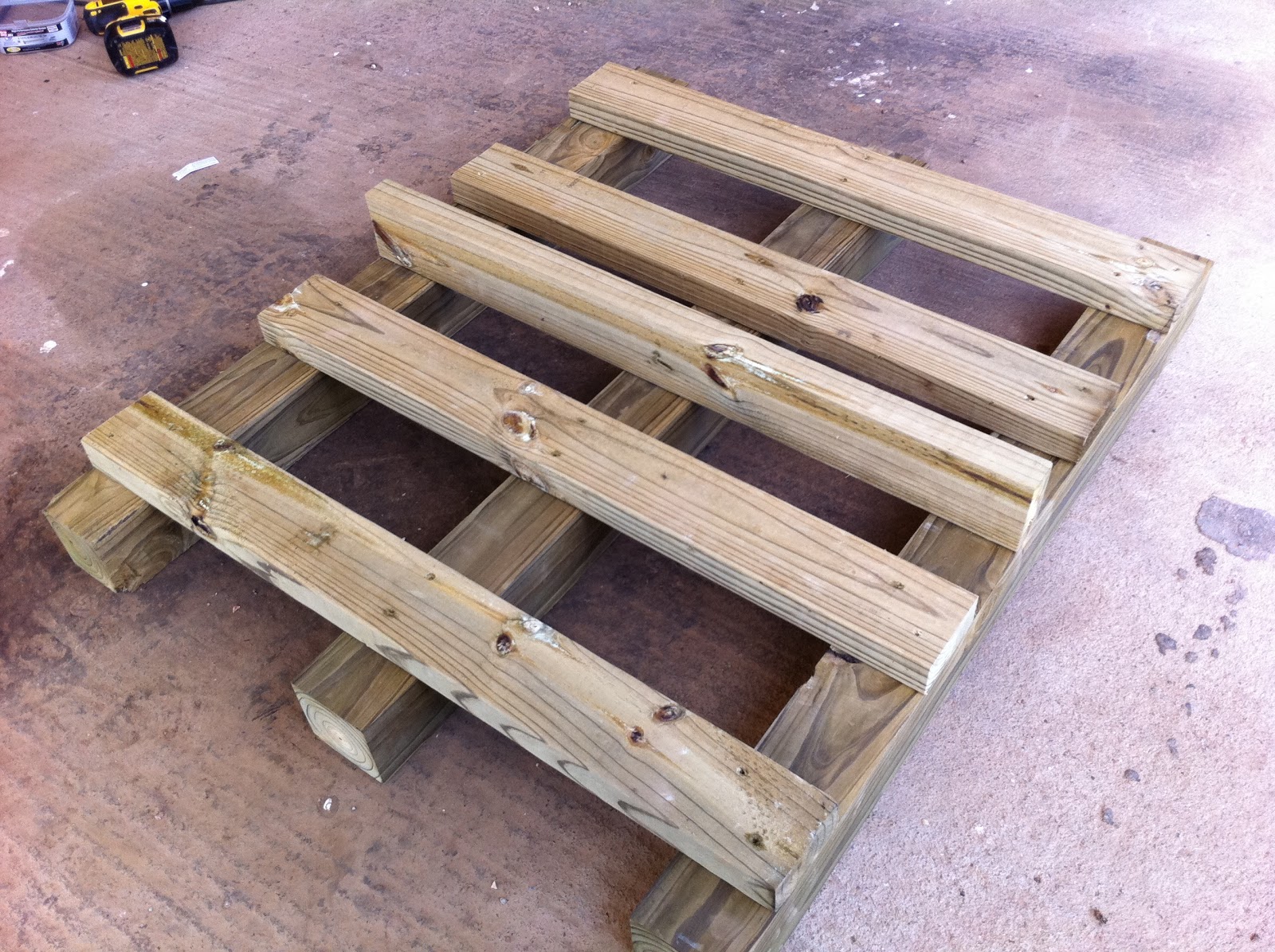
I started by designing and building a pallet to hold my hives.  I used the design of my bottom boards and my ten frame deep nucs as a center piece.

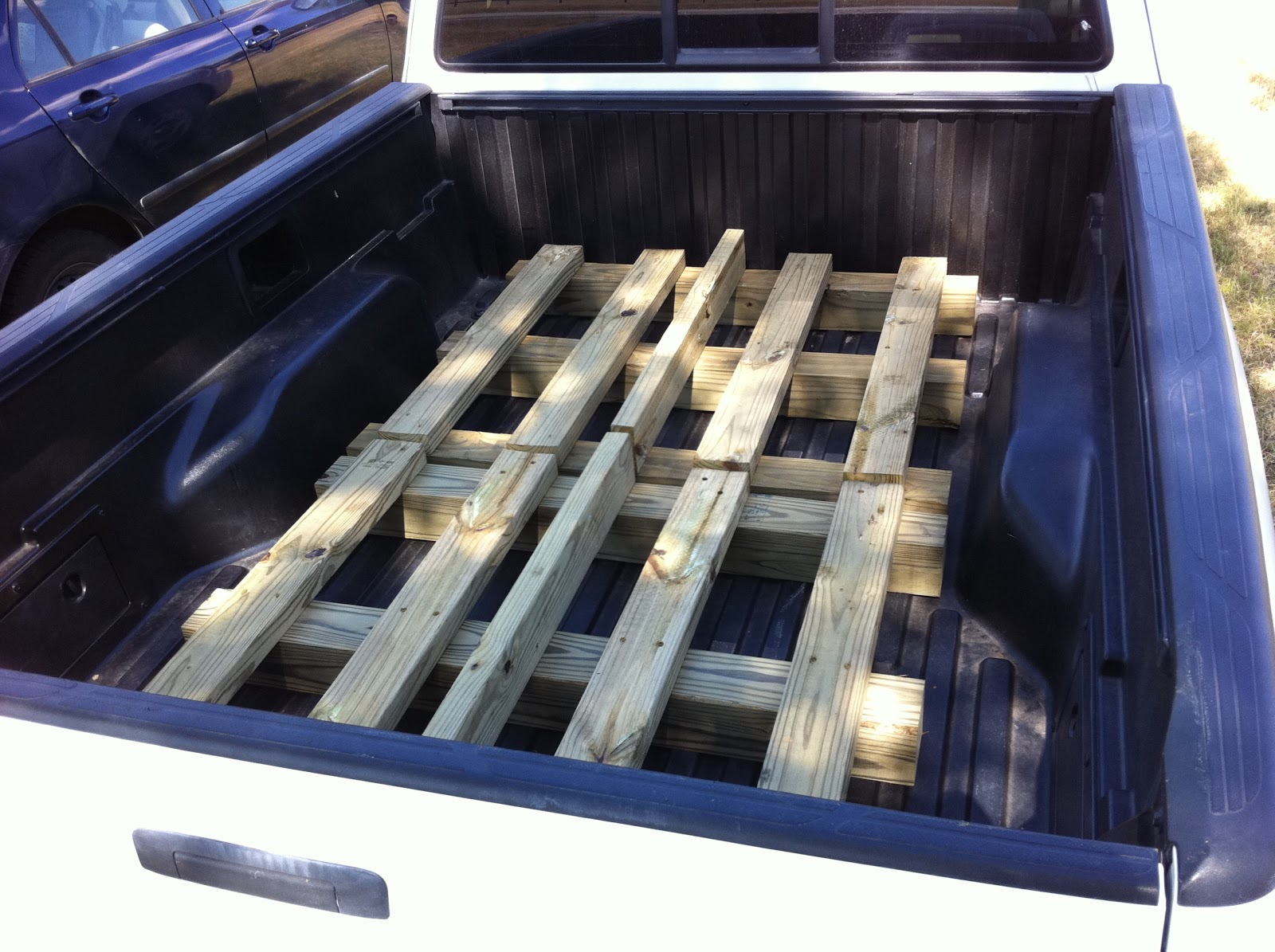
The result is a very sturdy and strong pallet of which two fit in the back of my pickup.

And here's the result in the field. 

The hives went to my church's farm, called "The Farm" which provides food to subscription holders and those subscriptions also pay for food for the economically disadvantaged.  So, I'm essentially treating it like a free pollination job.

I've discovered that the flat dark green paint I used to paint those boxes makes the hives way too hot, so I've begun switching them out.  While this is probably only a problem this time of year when it has been over 105 just about every day at my home for the past two weeks, I don't want to put the bees at a big disadvantage.

To Do:  Need to repaint the green hives. 

Thinking about making a slow switch to medium boxes.  I have 68 deeps which is the equivalent of approximately 100 mediums.  If I start selling nucs, it will be easy to sell anything away, and replace deeps with mediums in the process.  I don't need to get rid of the boxes, they can be trimmed, but it is a little harder to trim the frames, especially those with good comb still in them.  I think it can be done pretty well in a progressive fashion, as I sell 5-frame nucs.  All I need to do is sell two nucs, trim one box, buy eleven new frames.  Eventually I'll have nothing but mediums left.  But that means I'll have to sell about 130 nucs.  Could take a few years.

Also, learning about how to do combs.  As I now trim all new end bars to 1 1/4", I can fit eleven frames to a box.  So I do that for three deeps or five mediums, then above that place nine frames to a box for honey storage.  I'm also probably going to switch to Michael Bush's frame system where he uses mostly PF-120's and the rest foundationless.  The only difference is, I trim the endbars, which was his idea, but with is volume he hasn't taken the time to do it on all the plastic frames.

Sunday, July 10, 2011

The Worst Robbing I've Ever Heard Of


My biggest, most prolific hive, which is the mother to about four or five others got robbed the other week.  I'm not sure why.  I have never seen robbing on this scale.  I have never seen a strong hive get robbed.

Every drop of honey was robbed from this hive, I don't know how much, I hadn't checked this hive in a few weeks, but there was probably plenty.  After the robbing was done, after the bees gave up and left, I dismantled the hive, removing the top three boxes and placed a frame of honey in to avoid starvation.  The population of the hive had been reduced drastically.  There was a pile of dead bees in front of it more than an inch thick.

One of the changes I'm making due to this occurrence is to begin to place bees in outyards.  I'm developing a custom pallet in order to have four hive units that can be moved to other places.  The first one I have lined up is my church's farm where they need a little pollination.  It's also where I hope to sell nucs retail style in the future.  I'm going to try to limit my home yard to ten hives.  If all works well, perhaps I can move beyond sixteen total hives in the future.

Saturday, July 2, 2011

A Visit to Bush Farms

This past week, (the last week of June 2011) I went to visit the Michael Bush, a beekeeper of some renown among the online beekeeping forums.  If you read my blog here, you’ve seen me quote him and link to his website on quite a number of occasions.

It was an excellent opportunity to see how another beekeeper works and to experience the methods he has written about first hand.  I thought I’d explore them and discuss some pros and cons for an up close view of his methods.  Like many beekeepers familiar with Mr. Bush’s work, I was one who had read his website, viewed his pictures, and pondered his results, but had never seen them in person.  Now having seen them in person, I can more accurately decide which of his ideas to try and to weigh the options in a more enlightened fashion.

First, I’d like to discuss Mike’s use of eight frame mediums almost exclusively for all his normal hives.  His standard configuration is eight frames of PF-120 (Mann Lake Ltd.) and a single frame of Perma-comb.  This results in a box in which there is no space for the frames to move around and everything fits near perfectly.  Also with the PF-120’s are foundationless frames but they’re not quite as numerous.

The first thing that struck me about this method is the way the hive is setup in units.  In my hives with ten frame deeps, a frame is a unit.  In Mike’s hives, a box is a unit.  Therefore, his walkaway splitting technique is to make two bottom boards empty and deal the boxes from a hive back and forth on those two bottom boards.  So each hive now consists of every other box from the original hive.  To make up the size, he places a few empties on the bottom, or sometimes on the top.  With this method, one doesn’t look at the individual frames, nor does one need to.  I had to have a look just for funsies, but it wasn’t necessary.  I doubt splitting has ever been faster.

The PF-120’s contribute fantastically to Mr. Bush’s method.  His method requires far less work than the standard beekeeping method.  There is no frame wiring or foundation installing.  If a hive has died and sat around for years getting full of wax moths, all you need to do is pull the frame out, and peel off the layer of webs.  It’s almost exactly like removing the lint from the lint trap in your clothes dryer.  The foundationless frames are just as easy.  The Perma-comb frames need almost no care at all.  Put it back together, and the box-unit is good to go.

Mike also has a couple of top bar hives of which one was in operation when I was there.  It has a beautiful and prolific Carniolan queen heading it up, and the hive was beautiful.  Here’s a picture of me finding the queen.
 And here she is.

Mr. Bush has also experimented with just about every other standard and nonstandard equipment style there is and he has plenty of scraps of old hives and equipment to prove it.  I saw a Dadant-deep style hive in person for the first time, as well as such others as 12 frame deeps, observation hives, several types of pollen traps, long hives of 40 frames or more, nucs from 2-10 frames, and everything I’ve ever read about on his website.

So, after trying Mike’s 8 frame deep system, I have a few criticisms from my perspective.  Firstly, an 8 frame hive must be stacked especially tall for higher honey production.  Mike can’t do this, nor can I due to high winds, especially for him.  But his focus is not honey production, it’s queen production, so it works very well.  I do like the way a box is a unit that doesn’t need to be messed with, but I prefer the ten frame style for the stacking ability.  Also, since the frames are packed in pretty tight, it’s hard to pull them out without rolling a bunch of bees.  Again, this works well for him but not for me.
One other downside is the cost.  Medium boxes and frames cost only slightly less than deeps, and the same goes for 8 frame.  All the same cuts need to be made on each piece of woodenware and only slightly less wood is used, so there is no cost benefit, and in fact, the reverse is most often true.  For a certain amount of money, you get more square inches of comb with a ten frame deep hive than pretty much any other configuration.  
 
I am considering eventually making the switch to ten frame mediums.  I like them because they are lighter, and because splits can be made without concern for where the queen is.  Mike was even so gracious as to let me borrow some ten frame plastic mediums and frames to try out.  Someone gave them to him to evaluate, but since he doesn’t use ten frame equipment, he hasn’t yet.  So, I’m going to try them out and build some wooden ones and see how it works.  If I like them better, I’ll switch.  I don’t enjoy lifting or carrying deeps full of honey, and my extractor only holds 9 deeps but 18 mediums.  Also, I have a sneaking suspicion that mediums extract much better than deeps and blow out less.  I also think they’ll have fewer problems with foundation buckling.

Overall, his system is perfect for what he’s doing.  The rapidity with which his out yards can be processed is amazing.  The heaviest boxes don’t require straining to move.  Splitting is straightforward and speedy.  When I convert, it will be far easier to convert from deeps to mediums than it will be to convert from 10 frame to 8 frame.  Furthermore, I really think ten frame is what is right for me, and that’s what each beekeeper needs to decide for themselves.  What is right for you?  Spend the time doing the research and figure out exactly what you want and need.  My advice for all is to never get your bees in the same year you decide to become a beekeeper.  I think I need a separate post for ‘how to start beekeeping.’  Maybe soon.

Aside from the boxes and frames, the most important thing Mike is doing is keeping bees treatment free.  His bees are treated with nothing, absolutely nothing.  He is the most visible and vocal proponent of treatment free beekeeping, and he has shown for years that it works and even works on a large scale.

For those of you that have been asking for Mike to write a book, never fear.
 It will soon be here.  He’s spent a lot of time organizing what he’s written online into book form.  You can still find the vast majority of it online though, and he’s happy to tell you that.  But, there’s nothing like having something solid in your hands to read.  I was helping him proofread it this week, and it is quite good.  Look for it in hardback soon and in a three part ‘beginner, intermediate, advanced’ paperback edition as well.

Mike was kind enough to host me and another beekeeper this week.  He put up a tipi for us to stay in.  I enjoyed it.  Here he is putting it up.
Here is the finished product.
It was a great opportunity to see Mike’s operation, as limited as it is in scope at this time.  Next year, he’s going to be ramping up into full time queen production.  His queens are expensive, but I’d say they’re well worth it and I plan to be proving it with my wallet.  Next year, I’m planning on going back and learning his queen rearing techniques.  Thanks again Mike! 

Oh, one last thing.  The area around Mike's place is beautiful.  I mean, other than the corn and soy beans.


Tuesday, June 21, 2011

Wastefulness of the Natural Way of Queen Production

Here's the most recent photo of the yard.


I've been splitting like mad lately.  At last note, there were 12, now there are 17.  I recieved my four new queens with which I made four new hives.  There have been several near disasters with them, primarily owing to severe robbing problems.  One hive was being robbed in terrific fashion, so bad that I took the four frames of brood and queen and put them in a nuc box with a frame of capped honey and took them away.  The robbers then took after the next hive in the row which seemed to be holding its own.  I removed its feeder and the problem seemed to abate.  A third one, I opened to see if the queen had been released, and sure enough she had, just in time to fly away.  It was about five minutes before I found her balled at the entrance of a nearby hive.  It is yet to be seen if she will survive but I hope so.  If she was injured, she'll be replaced, hopefully at the very least with one of her daughters and not one of the daughters of the donor hives with which this hive was made.

Lessons learned:  Don't feed queenless hives.  Keep entrances very small on new splits.  Don't muck about with newly released queens. 

Now, about the title. 

In emergency situations, such as a lost queen or a walkaway split, the hive will feed appropriate aged larvae royal jelly and make a dozen or so into queens.  As Michael Bush rightly states, for all this expenditure of energy and nearly a month of no new eggs, the only result is a single queen as the rest get killed off.  While this is beneficial in a way to the bees in the sense of natural selection, it is very inefficient to us humans who want bees to make lots of bees and be out working making lots of honey.  This year, I have made about seven walk away splits.  That results in about seventy queens, 63 of which reach adulthood only to be immediately killed.  If I could have sold them, it would have netted somewhere in the range of nearly $2000.  What a waste.  Here's the evidence.

These are five dead virgin queens I found near the entrances of hives consisting of walkaway splits or recent supercedures.  This goes to show how inefficient it is to produce queens or new hives in this manner.  It also shows that I could have had the black queen that I've been wanting.

The solution is one of my primary goals for this next year which is to try producing queens in the more standard method of grafting.  With grafting, from a single queenless hive, you could get dozens of virgin queens to be mated in mating nucs to replace ailing queens or to add new stock.  Most rejections happen before the larva gets fed much and if you want to control the natural selection aspect of it, you can by deciding how many queen cells go into a nuc.

Here's what a freshly hatched virgin queen looks like.

In fact, this one is most likely the winner who killed one of the ones above.  You can see her fuzz is still wet, and her exoskeleton still has a milky tone to it.  She was very fresh, there were still untouched queen cells in the hive.  This is the queen that will replace the beat up swarm queen I posted about earlier.

On a final note, I don't think this location can or should support more hives than this.  During this time of year especially, there is little rain and few flowers.  Brooding is limited, and there isn't much storing of honey or building of comb going on.  Robbing can be a problem if a hive is weakened in some way.  It may well be a good time to make splits.  All splits have been successful (except those being fed who also got robbed) in the last month or so.

Unfortunately, due to all this splitting, there won't be any honey this year.  It's going to be enough of a trial to make sure all hives are provisioned for winter.  This could get interesting.  Then again, maybe everything will work out.  Always look on the bright side of life.

Saturday, June 4, 2011

Then there were 12

Latest picture of the yard.

As you notice, there are now 12 hives.  Interesting fact, one hive has now been split into 5, and would have been seven if all the queens had been successfully hatched and mated.

  
Here's a picture I took a few weeks ago of the best kind of frame beside the honey kind.  This frame is wall to wall capped brood.  If you can get three deeps like this, and a good honey flow coming up, you have a winning situation.  This year, instead of turning this into honey, I'm turning it into more bees.  On my way to 16, I have split 5 into ten and added two swarms which makes 12.  Just waiting for my four queens to come, and then I should have my goal of 16 for the year.

Another goal reached, now all of my frames of worker comb are currently in a hive and being protected from wax moths.  Next goal is 16 hives and six deeps of honey comb on for protection, otherwise, I'll have to melt it.  Not a bad option, but not the best either.

Saturday, May 28, 2011

Old Queen

Click on picture to enlarge.

Just caught this swarm a few days ago.  The queen's wings are quite tattered.  How old do you think she could be?  With wings like that, surely she has swarmed before.  The record is said to be nine years, but that was a queen with clipped wings.

Most of the swarms I catch around here seem to be very very small, likely less than a pound in most cases.  It leads me to hypothesize that there is a couple of small feral hives in small tree hollows in the area.  They are so small that an overflowing hive still produces a swarm that is this small.  It also leads me to hypothesize that the swarms I am catching are not being produced by my hives as my smallest hive being composed of a single deep would produce a swarm still much larger than this.  These last two swarms only covered approximately a single deep frame.

As you can see, this hive is composed of workers of a light complexion with well defined dark bands on their abdomens.  The other swarm is composed of workers with about 30% being dark complected like carniolans.  This is interesting to me because I'm still on the hunt for black queens.  None of my nine queens are black as of the current time.

Not all swarms draw small cell foundation well, this one is doing better than most which leads me to believe at least second generation away from a kept hive. 

Unfortunately for this queen, her days are surely numbered.  A supercedure cell already prepares her replacement.

Wednesday, April 27, 2011

Home Built Comb


There has been a lot of rain this last week.  You may have heard of all the thunderstorms and flooding and tornadoes and the like.  I haven't had much to do with the bees, it's been frustrating.

But I do have some pictures from last week when I checked up on some queens that were hatching from splits.
Here is picture of nice fresh white queen cells drawn from fresh white foundationless comb.

Here are the more standard type, some times they blend in.
Incidentally, these two cells were chewed out by a queen from the other side of the frame.  That's life.

Finally, this is the base of worker comb drawn in a foundationless frame.  I took this picture to demonstrate the concept of Housel Positioning, an idea some follow.  Basically, you place the frames to the Y in the base of the cells is right side up facing away from the center of the hive and upside down facing the center.  No, I'm not going to be defending the practice.


Right now, I'm in a situation where my virgin queens have hatched (even saw one) but have not yet been able to mate do to the weather.  Fortunately, it is supposed to be in the low seventies tomorrow, so they will get their first chance.  From now on in, we have to build up to have enough frames of brood to start the four new hives what will house four new queens when they arrive in May.

Saturday, April 9, 2011

A Lot of New Stuff

Today's picture:


This last week, I have done quite a few things.
First, I ordered some Mann Lake PF-105's.


These are black plastic frames with a cell size of about 4.95mm.


I trimmed the end bars from almost 1 3/8"


To about 1 1/4".


This for what could be called "Narrow Frame Beekeeping."  Michael Bush's website explains it here.  The basic idea is that with smaller cells, naturally, the space between the combs will also be smaller.  Also, you can fit 11 frames in a 10 frame box, or nine frames in an eight frame box.


So, today, I was out working the bees to try to catch up the behinders and make the first split of the year.  I finally found the queen in the big hive who I was unable to find before.  Here she is.  She is a biggun.


I took her and about four frames of brood and placed them in my new 10 frame nuc design.  It's a ten frame sized box that is about 3/8" deeper than normal to account for bee space under the frames.  It has a disc entrance which can be closed in case of skunk predation or to be moved or whatever.


I had added some foundationless frames a week ago as an experiment.  Here is one of those frames after one week.  That is 100% drone comb by the way, and it already has eggs in it.


Here are some five frame nucs I made from plywood.  They are inexpensive and I added the disc entrances for an added measure of utility.  They could be used to catch swarms, as bait hives, as nucs in the yard, or to sell.  They are made from 15/32" plywood and one sheet can make about four and change.


So, now for the rest of the month and into next month, I am working to get enough brood to start the four new hives that will be made from the four queens coming in the mail in the latter half of May.  I hope these bees can explode and reach critical mass in time.  The skunk predation is still reverberating through the months.  Depending on conditions, the new queens may be starting with a very minimal population of bees.

Saturday, April 2, 2011

Pictures of Queens!

Here's today's obligatory apiary picture.


Here's a picture of the queen from one hive.


Here's a picture from another hive.


Here's one.


And finally this one.


One wasn't available for comment.
Actually, the problem is that one is pretty large and I couldn't find the queen.  The other four are smaller in comparison and the queen is a bit easier to find.  They are small primarily due to the skunk predation I've been experiencing lately, but I've taken steps to prevent that in the future.  Now I need to get them caught up.  With warm weather for the foreseeable future, this will be easier.  I can Robin Hood frames of brood from the best hive and get the others to critical mass.  I haven't been able to do that lately because the smaller hives couldn't keep the brood warm and it just died.

Tuesday, March 22, 2011

A Very Windy Day, And Small Cell Comb


Today was very windy.  I was taking stuff out to the yard so I could make some space in the shop, and perhaps add the benefit of possible swarm traps.  So, add five hives to the empty stands, and you'll start to see an idea of how I want the yard to look toward the end of the summer. 

You'll notice the double wide hive to the far right.  I'm trying a new configuration on that one with less ventilation and the bottom permanently attached.  I'm also trying to do upper entrances almost exclusively due to skunk problems.


Now the small cell.

Dee Lusby and her husband Ed were the primary apologists for small cell foundation in the modern age.  Bees left to their own devices tend to make comb of widely varying cell sizes and about the average for brood comb is 4.9mm in diameter.  However, most commercially available foundation is available in the 5.2mm to 5.5mm range or so.  So the Lusby's made their own foundation mill.  Similar mills as well as a variety of small cell foundation are now available from many beekeeping supply companies.

The argument is that in combination with a few other factors, housing the bees on 'small cell' comb gives them the upper hand in disease control.  I apologize in advance for the sideways pictures.  They were taken with the same iPhone as the one at the top, but just won't align right.

 The above photo shows 4.9mm comb drawn from small cell foundation.  This is the brood comb I use.

And here is comb drawn from larger crimp wired foundation.  I don't know its actual origin, this comb came from a hive that was given to me six or seven years ago.  It is old and dark and is good and strong for extracting honey.

There have been some actual scientific studies showing that small cell alone will not save bees from varroa mites.  However, Dee said that small cell was only about a third of the puzzle, another third being genetics, and the last third was the beekeeping method.  I have been successfully [depending on your point of view] keeping bees with her methods for eight years.  I have never lost all my bees at any one time.  Most especially, I have never used chemicals to treat the bees.  I can't really use the term 'organic' anymore because now that it's codified into law, the term is pretty much worthless.  But, the facts are, my bees are completely treatment free, and my honey is raw and unfiltered.

Friday, March 18, 2011

A Hive on the Brink.


Above is another recent view of the yard.  I'm taking a lot of pictures, because I would like to show a progression from winter to summer.

To the left is my most active hive, and I have been using nurse bees from it to fortify the hive to the right.  The hive to the was doing as well as the others, with a good brood pattern, but suffered extremely heavy losses to skunk predation.  It was to the point that they were so cold, they couldn't break cluster even on flying days.  I have them a frame of brood, but they couldn't keep it warm.  So I gave that up and started giving them nurse bees instead.  Since then, they relocated the broodnest, established a cluster, and the queen has started laying again.  The first eggs should have hatched yesterday or the day before.  I predict they will need more nurse bees to maintain their population before they reach a sustainable minimum.  But it's really fun as a beekeeper to pull a hive back from the brink without any chemicals whatsoever.  But of course, they were not on the brink because of disease, it was a skunk.

The hive to the right is also more typical of my new standard format.  There will be little to no bottom entrance.  Instead, I have constructed what I'm referring to as 10 frame nucs with a bottom permanently attached and a hole with a disc entry on it.  I would have pictures, but the discs are out of stock at Kelley and I haven't gotten them yet.  Rule of Thumb: Don't expect to get anything in any sort of good time this time of year from a bee supply house.  Everybody has stuff out of stock, even my favorite, Mann Lake Ltd.  Anyway, the bottoms of my hives will be a 10 frame nuc, bottom permanently attached, disc entry, with the main entrance at the top as you see on the right.  I have a number of those upper entrances, and I can use them normal side up like is shown for times when I need an entrance reducer, or the other side up for use as a shade, awning, or fool-proof snow blocker in winter.